

In this video, we teach you how to use an AED on a child, including pediatric pads and where they go.
What you’ll learn
- How to determine if an AED is needed and when
- Choose between pediatric and adult pads
- Place adult pads on a small chest without them touching
- Know where the age boundaries sit, at both ends
Yes, and you should. That's the short answer, and it's worth putting first because the hesitation people feel here costs more than any mistake they're likely to make with the machine.
The worry is understandable — a device built for a grown adult, used on someone half the size. But there's only one thing that actually changes, and it takes about a minute to learn.
Yes, and almost nothing changes
Turn it on, follow what it says, keep everyone clear when it tells you to. The whole procedure is the same one you'd use on an adult — same power button, same spoken prompts, same decision made by the machine rather than by you. It still won't deliver a shock to a heart rhythm that shouldn't get one.
So this page isn't a second set of instructions. It's the one difference, and where the age limits sit.
Pediatric pads if the case has them
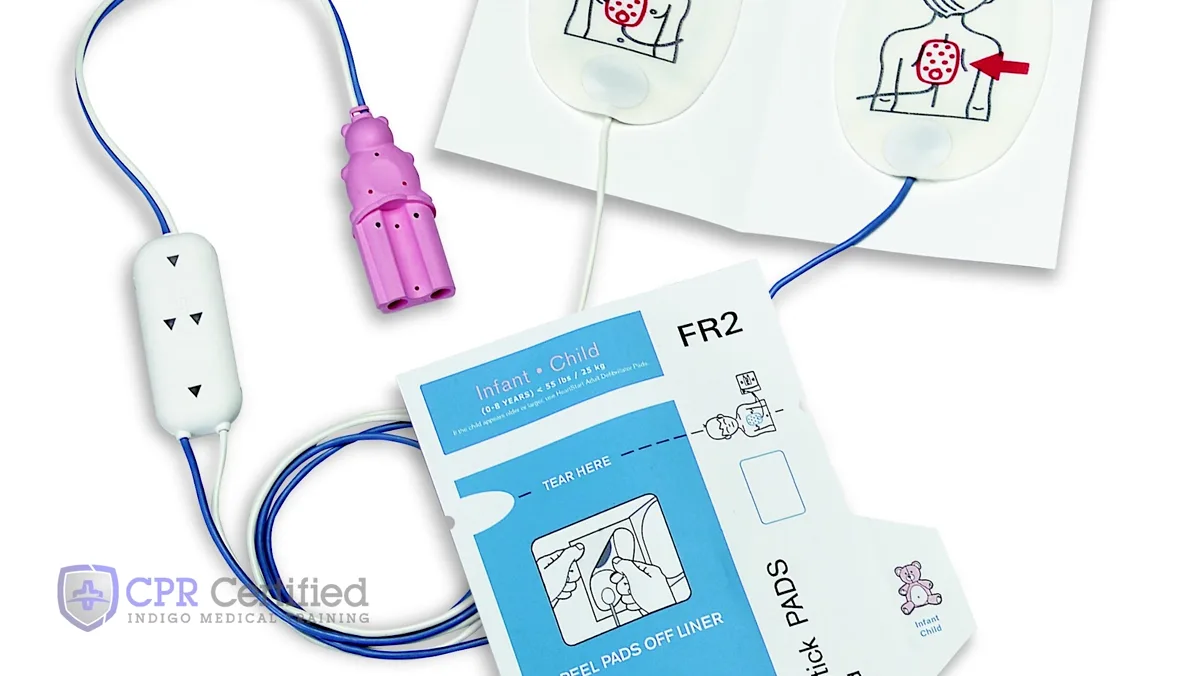
Some AED cases carry a second, smaller set of pads for children — sometimes on a separate key or switch instead. If yours has them, use them. They're sized for a smaller chest and they go exactly where their own diagram shows.
If the case doesn't have them, don't go looking. That minute is worth more than the pads are.
When the only pads are adult ones
This is the one thing that changes, and it's the whole technical content of this page.
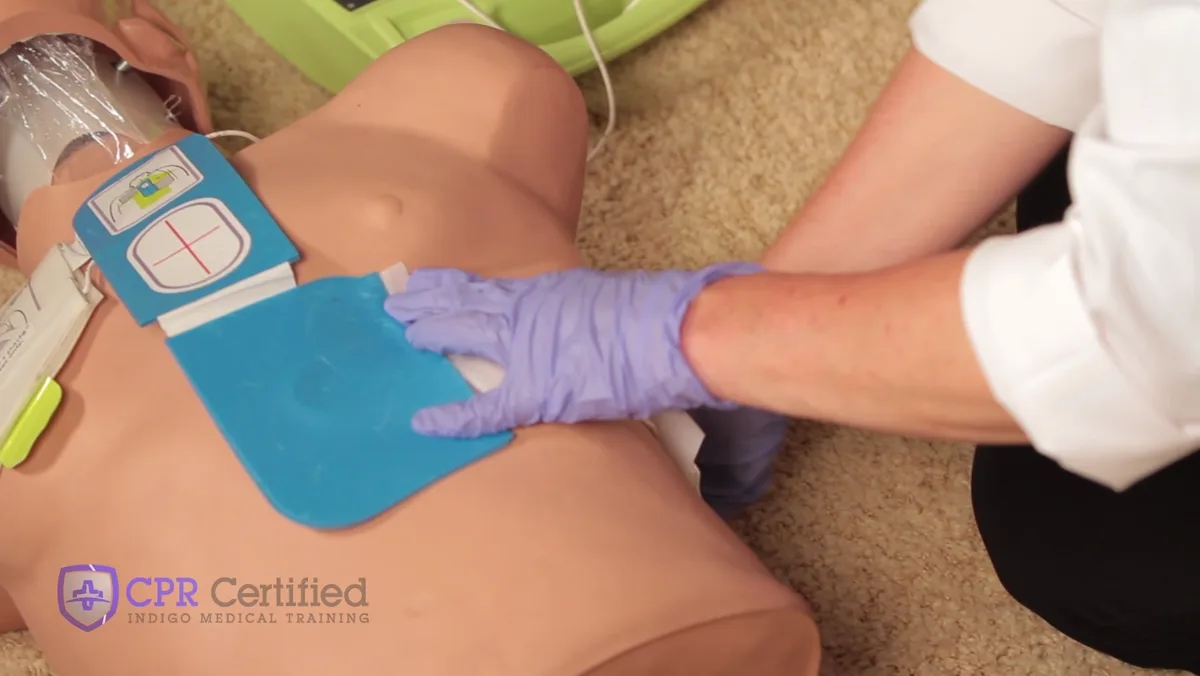
Front and back rather than both on the chest, and the reason makes it easy to remember: the shock has to travel through the heart. On a small body, two adult pads placed side by side can end up touching — and if they touch, the current takes the short route between them instead of the route through the chest. You'll need to roll the child slightly to place the back pad. That's fine, and it's quick.
How young is too young
A child, for this purpose, is roughly one year old up to around eight, or until they look like a young adult. Past that, treat them as an adult and use adult pads normally. Nobody is checking a birthday — it's about body size, and the pads themselves usually say what they're for.
At the other end: AEDs aren't used on babies under one year old. It isn't part of what's taught for infants, so if you're dealing with a baby, the answer is chest compressions and breaths rather than a machine — infant CPR is its own technique and it's the thing to know instead.
Put it into practice
Training scenario:
You coach a youth soccer team. A ten-year-old goes down during a match and isn't responding or breathing normally. Another parent is doing compressions and someone has called 911. You run to the clubhouse and come back with the AED — and when you open it, there's only one set of pads inside, and they're the adult ones. A parent behind you says "those are too big, aren't they?"
Walking it through:
You use them. Adult pads on a child are allowed when pediatric ones aren't available, and the alternative isn't a better set of pads — the alternative is no defibrillator at all. The parent needs to hear that in one sentence, said with confidence, because a debate on the touchline costs the minutes this is all about.
The placement is the part to get right. One pad high on the right side of his chest, and the other on his back between the shoulder blades. Roll him enough to reach, place it, and lay him flat again. They must not touch each other — that's the only real risk here, and on a ten-year-old there's plenty of room as long as one is front and one is back.
Then it's the ordinary sequence: turn it on if you haven't, let it analyze, everybody clear, press the button if it asks for it, and get hands straight back on the chest. The compressions are still the thing keeping him alive between shocks.
Medically reviewed by Dr. Mary Williams, RN, DC
Video transcript
0:00 in this video i'm going to demonstrate how to use an automated external defibrillator on a child using an aed on a child is
0:10 almost the same as using one on an adult so if you haven't viewed that video yet please do so before continuing if the aed kit
0:21 has pediatric pads use them for the child victim the pads are smaller and the pad placement is the same as the adult pads
0:31 for adults just follow the diagram on the pads if there are no pediatric pads available for your child in need
0:40 you may use the adult pads on him or her under the condition that you place the first pad over the child's right
0:47 upper chest and the other pad on the child's back the point is to allow for the heart to receive an electric shock to reset its natural rhythm
0:58 on a side note we do not teach infant aed as it is generally not taught by the american heart association
Check yourself
Three questions on what you just read.